Blog

Cloud vs local web scraping: How to choose

September 18, 2026

web scraping infrastructure, automation, Web Scraper Cloud, local web scraping, Cloud web scraping
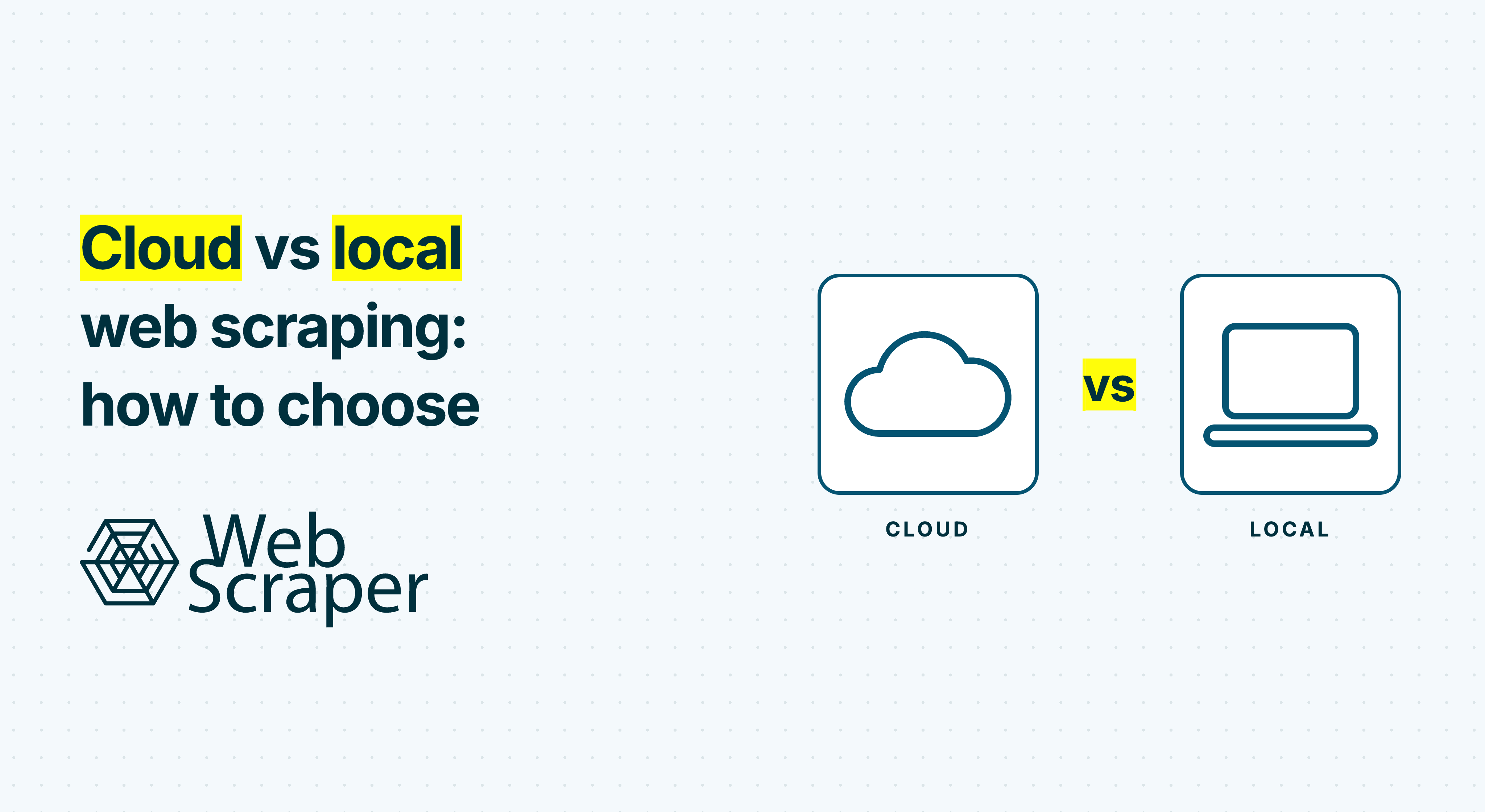
A scraper’s interface does not tell you where its jobs run. A browser extension can create workflows that later execute in the cloud, while a Python scraper can run on a laptop, an office server, or a cloud virtual machine.

The practical decision is therefore not simply “local or cloud.” It is who operates the execution environment, keeps it available, manages browser capacity, handles failures, and delivers the resulting data.

Local execution is usually the simplest starting point. Cloud execution becomes more useful when the dataset must refresh without supervision, meet a delivery deadline, or serve more than one person. Self-managed and managed cloud systems achieve that in different ways.

Continue Reading

Batch vs continuous web data collection

September 18, 2026

data freshness, Web Scraper Cloud, data pipelines, Scraping architecture
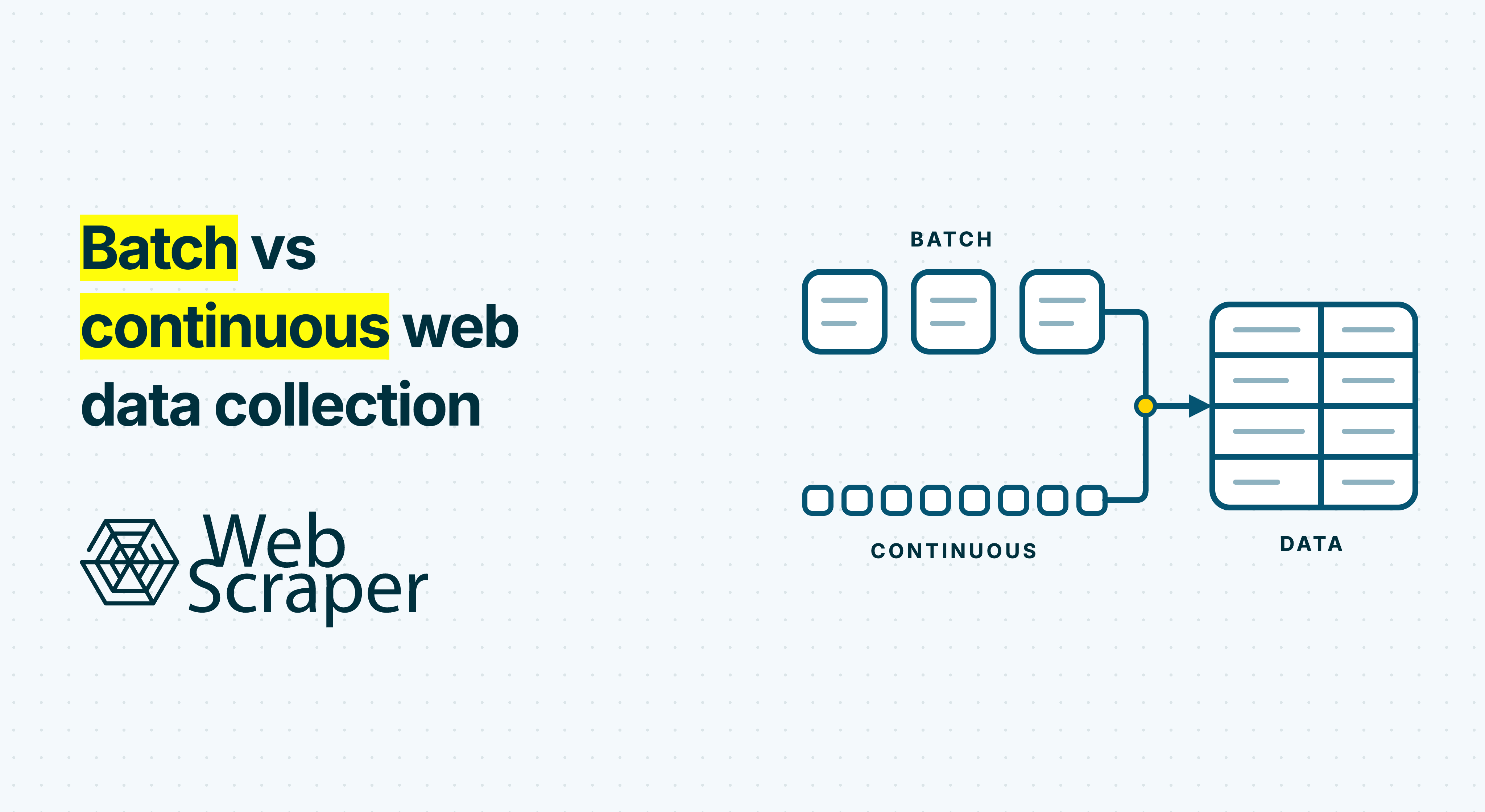
Batch and continuous web data collection solve different freshness and completeness problems. Batch collection processes a defined scope and publishes a validated snapshot. Continuous collection keeps a persistent queue running and publishes smaller updates as individual targets become due.

Neither model is universally faster, cheaper, or more reliable. The right choice depends on how fresh the data must be, whether consumers require a complete point-in-time snapshot, and how much operational complexity the pipeline can support.

Continue Reading

When browser rendering becomes a scaling bottleneck

September 17, 2026

headless browsers, Web Scraper Cloud, Scaling, Web scraping performance, FullJS
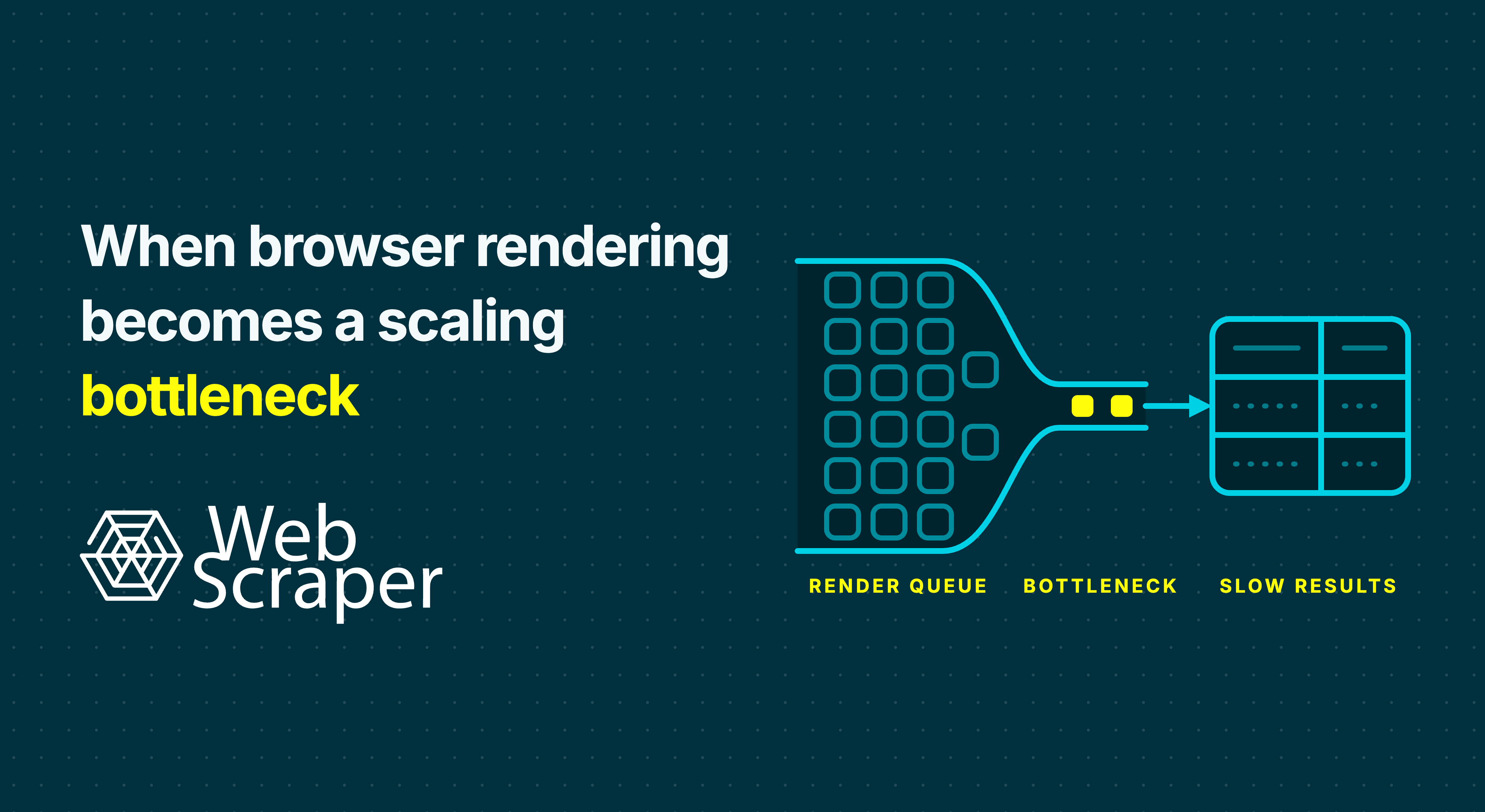
Browser rendering becomes the scaling bottleneck when the browser stage cannot turn queued URLs into validated pages as quickly as the rest of the scraping pipeline can supply and process them. At that point, adding more work increases queueing, page latency, retries or failures without producing a proportional increase in accepted data.

The solution is not automatically more browser concurrency. First prove which stage is saturated, calculate capacity from accepted output and remove browser work that the dataset does not require.

Continue Reading

How to scrape conference exhibitor lists accurately

September 16, 2026

market research, data quality, event intelligence, lead generation
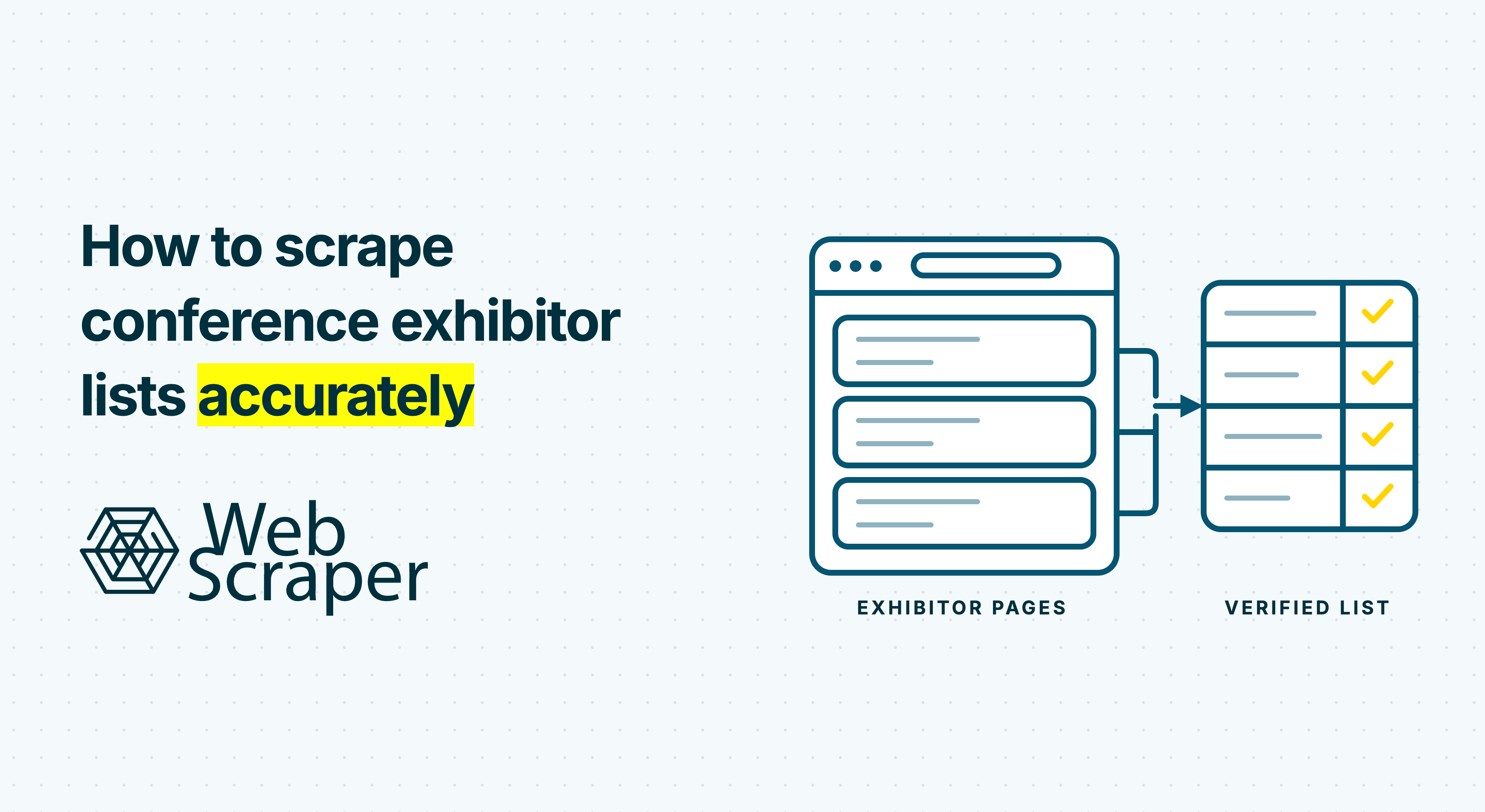
To scrape conference exhibitor lists reliably, first map how the public directory works, define an event-specific schema, build one record for each exhibitor listing, follow profile links for additional fields, and make sure every page or dynamically loaded result is covered. Only automate the sitemap after a limited test produces a complete, correctly structured export.

The difficult part is rarely extracting a company name. It is preserving the relationship between the exhibitor, its booth, categories, profile, and event edition without missing records or deleting legitimate duplicates.

Continue Reading

Extract website data to Excel or CSV automatically

September 16, 2026

Excel, Web scraping automation, data export, CSV
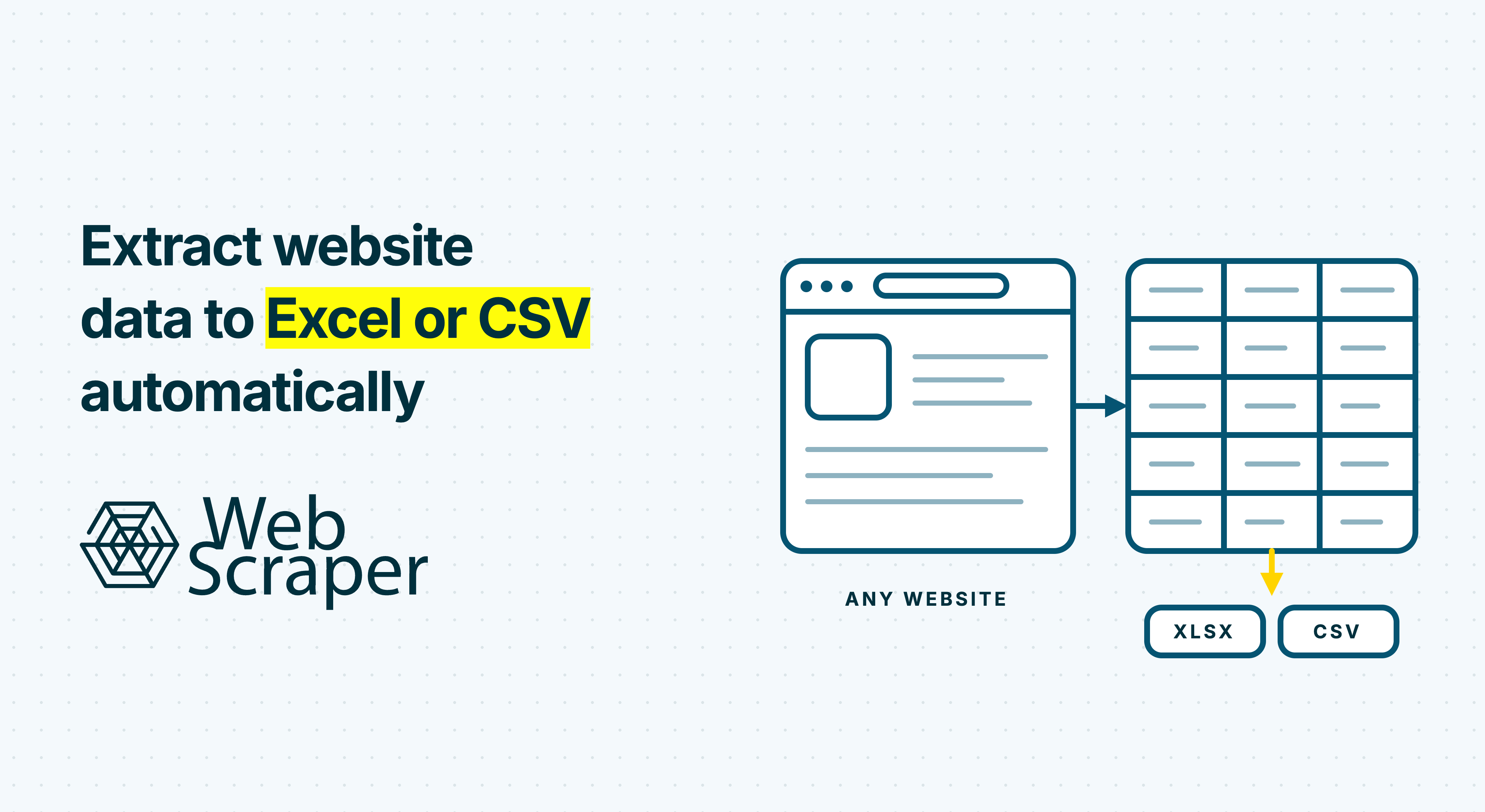
To extract website data to Excel or CSV automatically, define the columns you need, build a scraper that reaches every relevant record, validate the result, and then schedule the completed dataset for delivery. The file format is only the final step. Reliable automation also depends on navigation, consistent field structure, and quality checks.

For a simple public table, Excel Power Query may be enough. For recurring product, property, job, marketplace, or directory data spread across listing and detail pages, a visual scraper with remote execution is usually more practical.

Continue Reading

Build a price history dataset from scheduled scrapes

September 16, 2026

Time-series data, e-commerce data, data pipelines, Scheduled web scraping
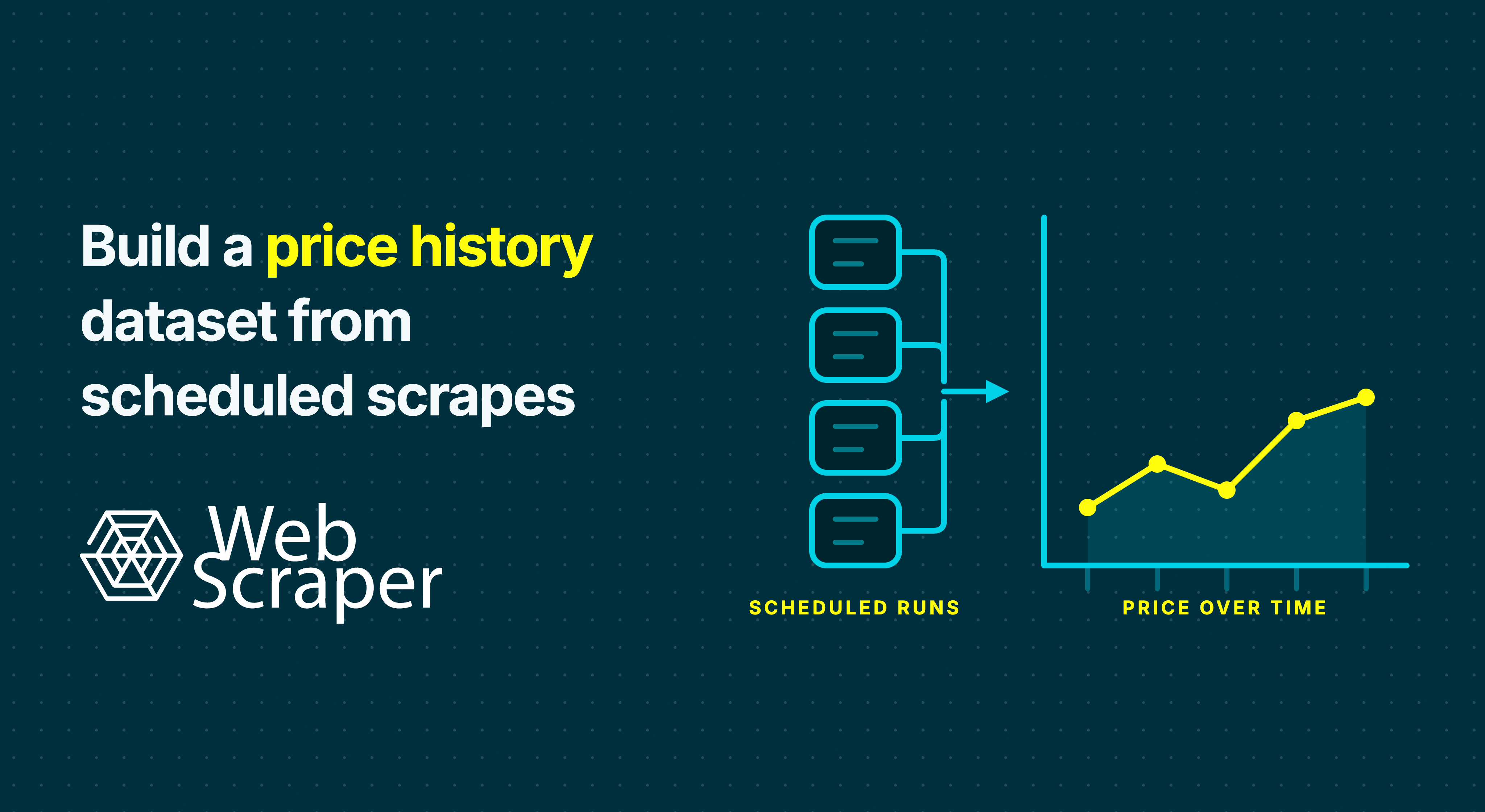
A scheduled scraper gives you repeated price snapshots. It does not create a reliable price history by itself. To build one, you need to preserve when each price was observed, connect observations to a stable product or offer, record gaps honestly and prevent failed or duplicate imports from becoming market data.

This guide shows how to turn recurring scrapes of a known set of public product pages into an auditable time-series dataset. Web Scraper Cloud handles tested extraction, scheduling and delivery, while your downstream system owns historical storage, acceptance rules and analysis.

Continue Reading

How to automate Web Scraper Cloud with the API

September 15, 2026

Web scraping automation, Web Scraper Cloud, data quality, data pipelines, API
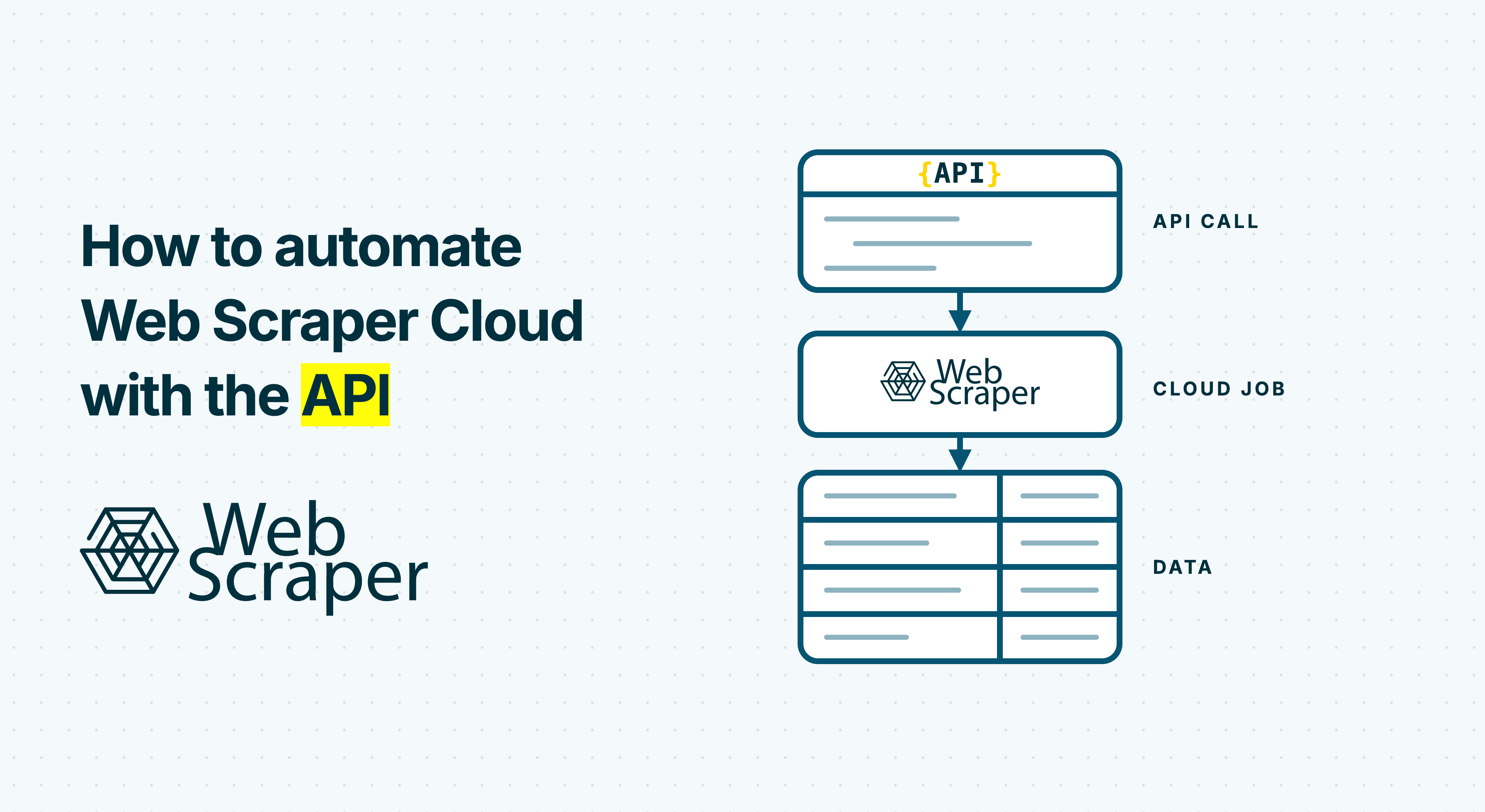
To automate Web Scraper Cloud with the API, treat every scrape as an asynchronous data-pipeline run: identify the sitemap, create a job, record its ID, wait for a terminal status, download the result, validate it, and only then publish it downstream. The API removes the need to start and monitor recurring jobs manually, while Web Scraper Cloud handles the browser execution and collection work.

This tutorial builds that workflow in Python. It also covers the parts that make an automation safe in production: rate limits, ambiguous POST outcomes, newline-delimited JSON, data-quality checks, quarantine, and atomic promotion.

Continue Reading

Job board scraping: Build a reliable job dataset

September 15, 2026

job data, Web scraping automation, data quality, dataset design
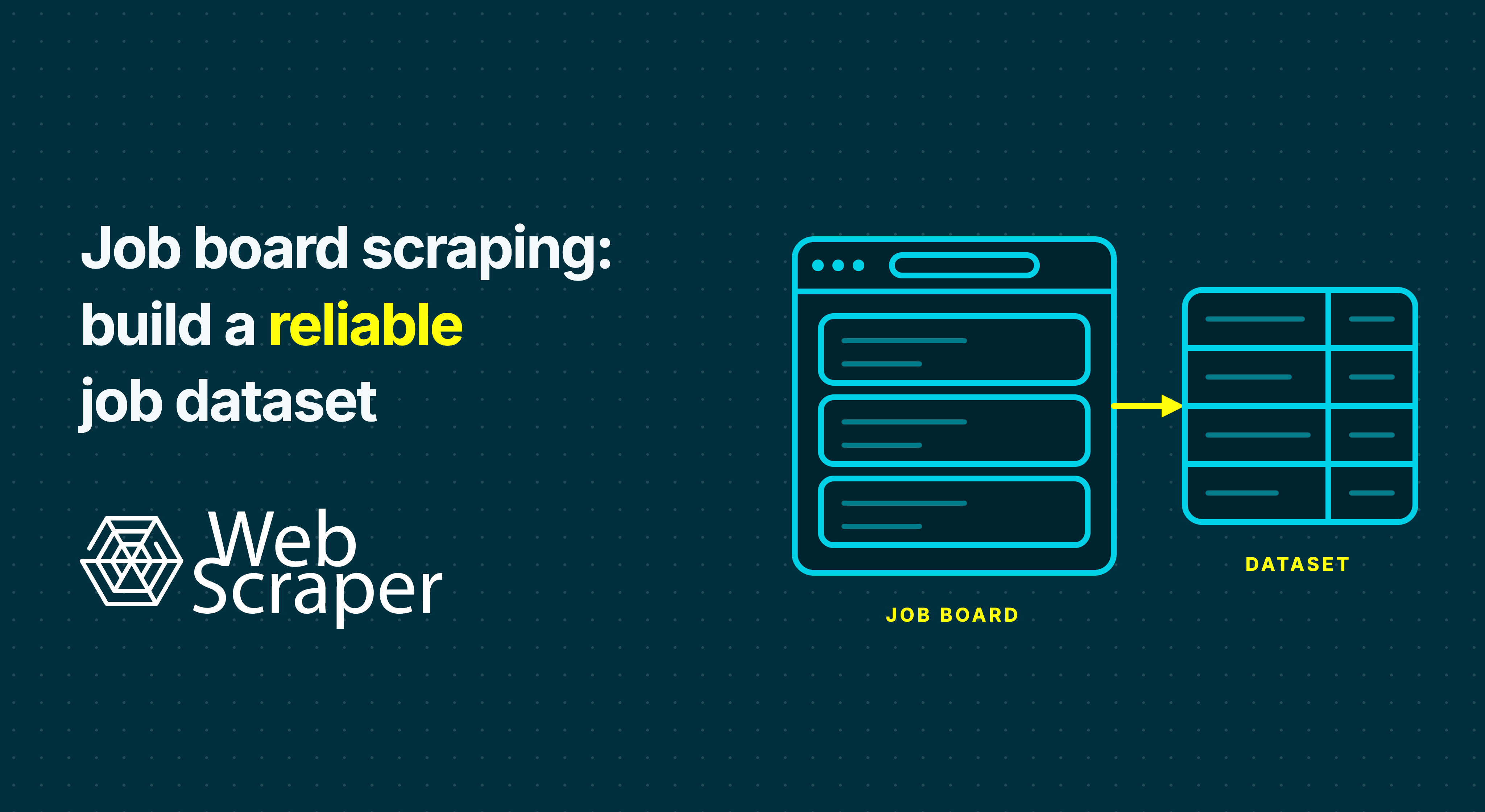
Job board scraping becomes difficult when the output must remain complete, current and explainable across recurring runs. A scraper can finish successfully and still return duplicate listings, stale vacancies, missing detail pages or records that cannot be traced back to what the source showed.

The reliable approach is to design the dataset before automating collection. Give every source listing an identity, preserve its history, normalise fields without discarding the original values, and define how a posting becomes active, updated or inactive. This guide covers permitted public job boards, company career pages and accessible applicant tracking system pages.

Continue Reading

How to build a competitor price tracking dataset

September 15, 2026

e-commerce data, product matching, Web Scraper Cloud, data quality
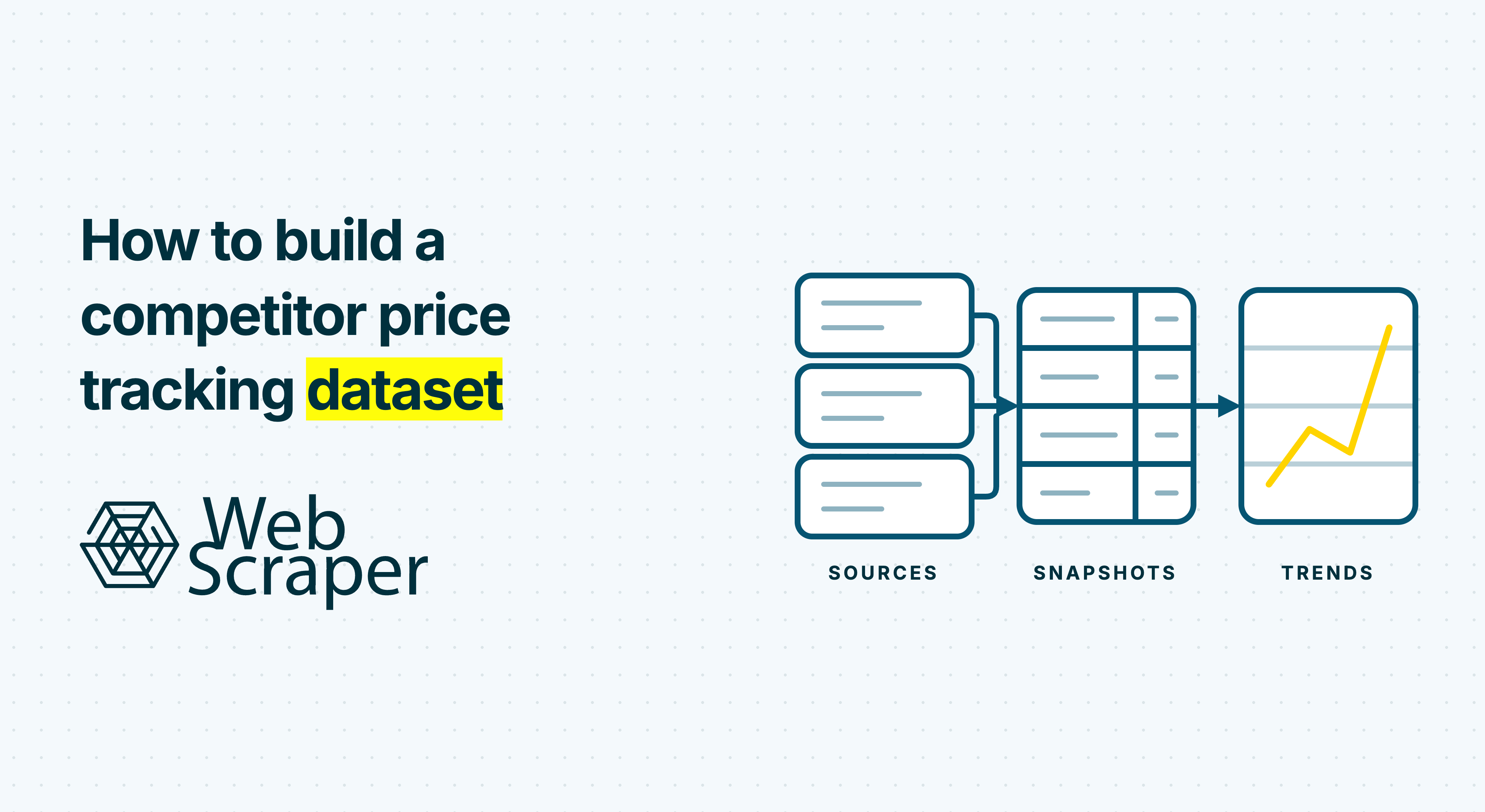
Reliable competitor price tracking starts with a data contract, not a dashboard. Each price must be tied to the correct retail listing or variant, offer conditions, market, collection time, and transformation history before it is safe to compare.

This guide shows how to build that warehouse-ready dataset for a known set of public retail stores. Web Scraper can run source-specific extraction and delivery, while your team retains control of cross-store matching, semantic normalization, acceptance rules, history, alerts, and pricing decisions.

Continue Reading

Product assortment monitoring with web scraping

September 14, 2026

data quality, web scraping, Product assortment, Competitive intelligence
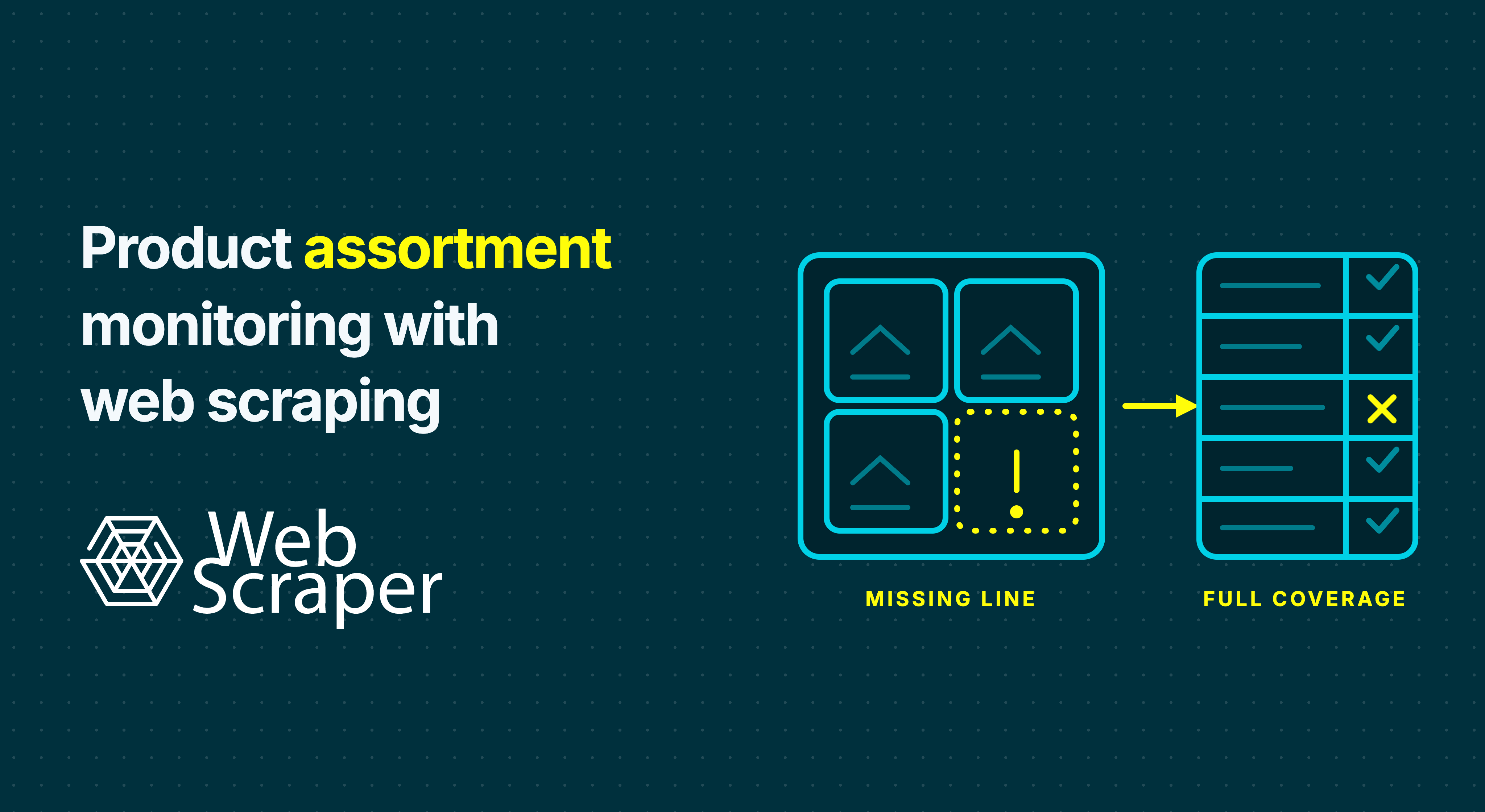
Product assortment monitoring uses recurring web scraping to track which products and variants a retailer presents, where they appear and how the range changes over time. It can reveal new listings, apparent removals, category moves and changes in variant depth across public retail and marketplace pages.

Reliable monitoring requires more than comparing two exports. The workflow needs a defined scope, stable product identities, complete snapshots and rules that distinguish a genuine delisting from an incomplete scrape.

Continue Reading

Webhooks vs polling for scraping job results

September 12, 2026

scraping automation, data quality, data pipelines, APIs
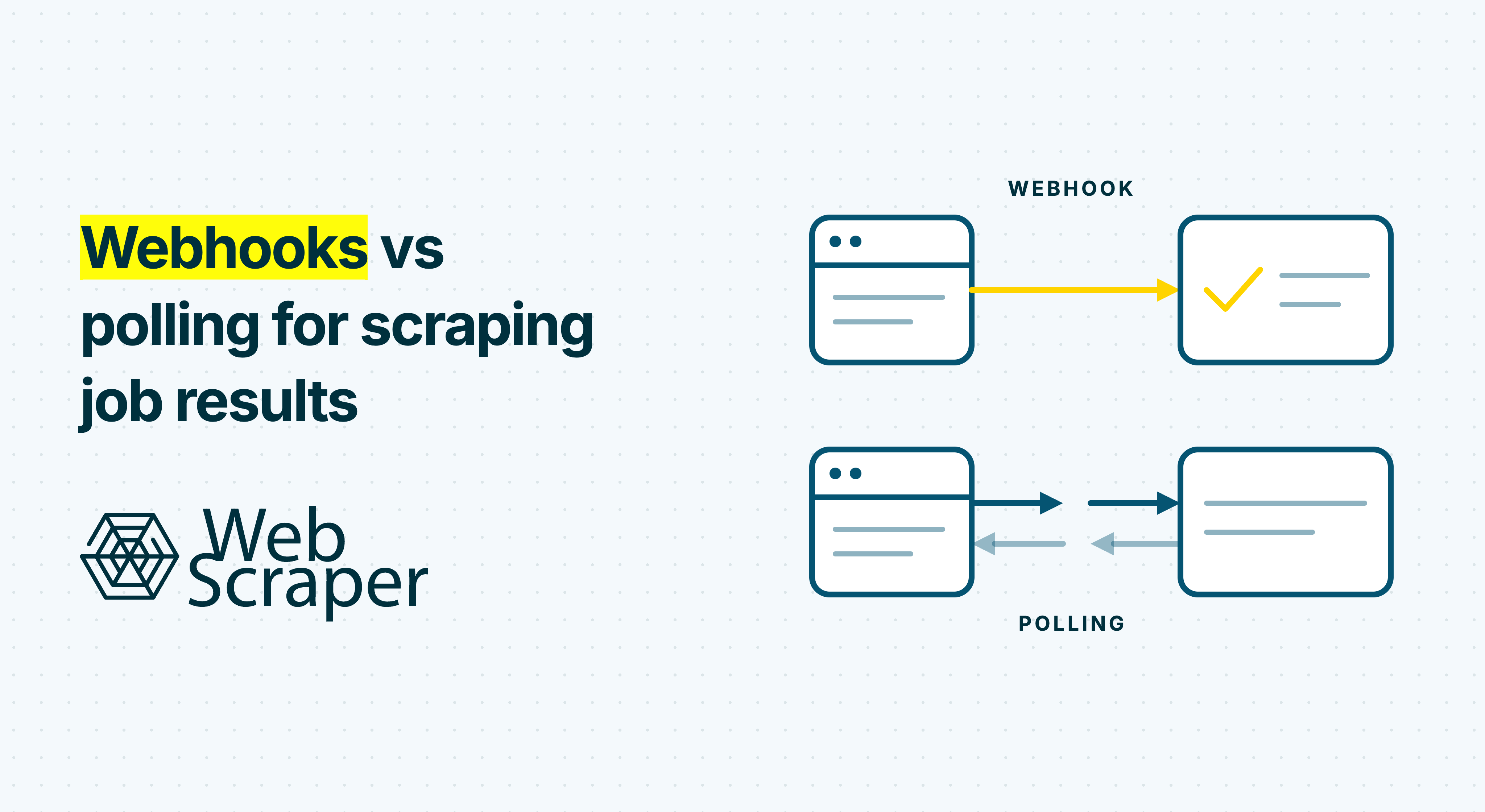
Webhooks usually beat polling for detecting when an asynchronous scraping job has finished: they reduce unnecessary API calls and notify your pipeline with less delay. Polling is still the simpler option for low-volume jobs, outbound-only networks or systems that cannot receive public HTTPS requests.

For recurring commercial datasets, the strongest design is often hybrid. Use a webhook as the fast completion trigger, process the result idempotently outside the request, and poll only to reconcile jobs whose notification may have been missed. Whichever pattern you choose, treat job completion and dataset acceptance as separate decisions.

Continue Reading

What data can you extract from a website?

September 11, 2026

data quality, no-code scraping, web scraping, dataset design
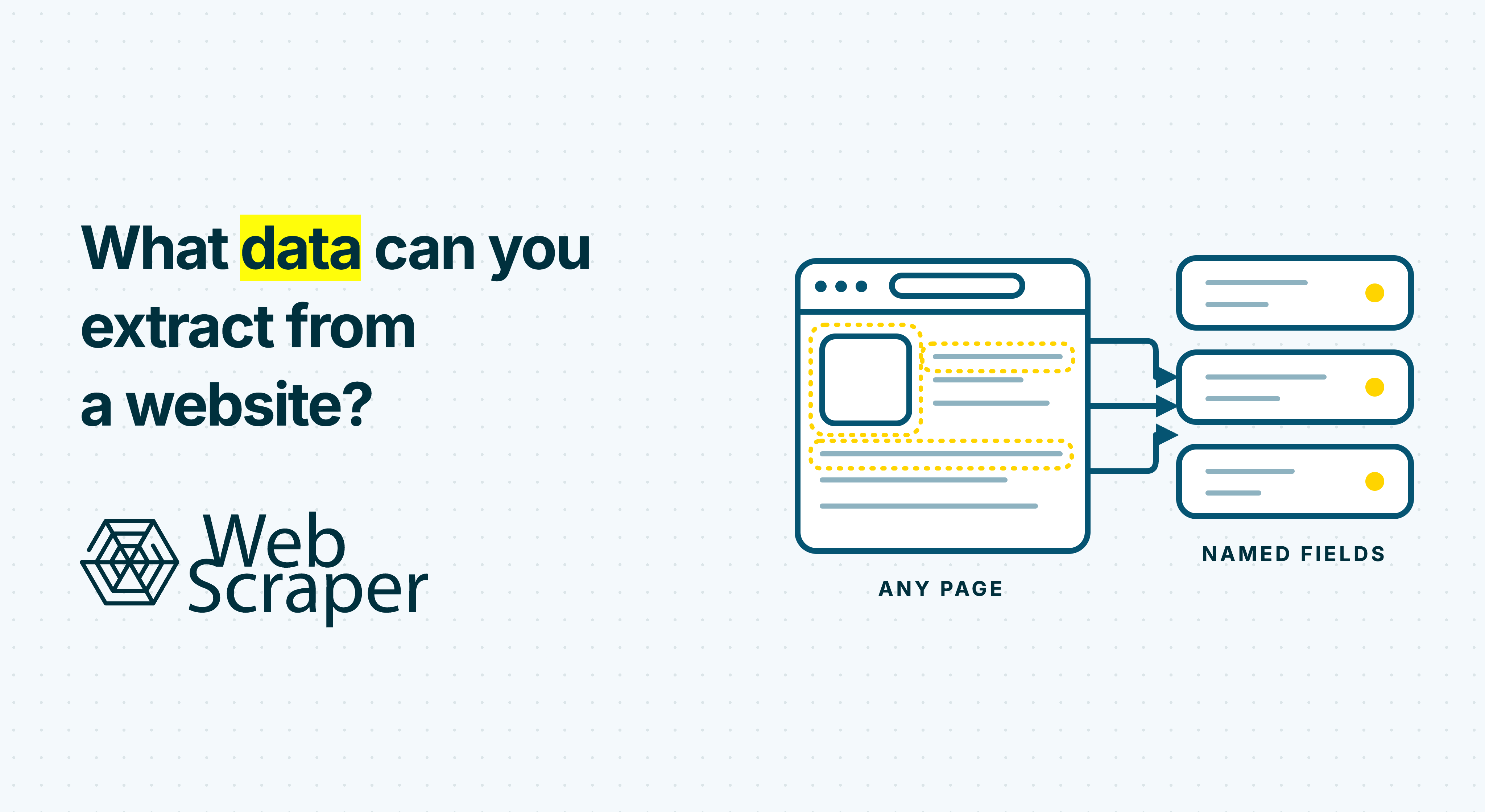
You can extract visible text and numbers, links, identifiers, media URLs, tables, repeated listings, HTML attributes, metadata, embedded structured data, browser responses and information revealed after interactions. The boundary is what the website delivers in a permitted, reachable page state.

The more useful question is what records you need and whether the website exposes every field required to build them accurately. A scraper can collect every visible price on a page and still produce the wrong dataset if it misses variants, mixes seller offers or omits the region and collection time.

Continue Reading

How to monitor online marketplaces

September 10, 2026

seller monitoring, marketplace data, web scraping

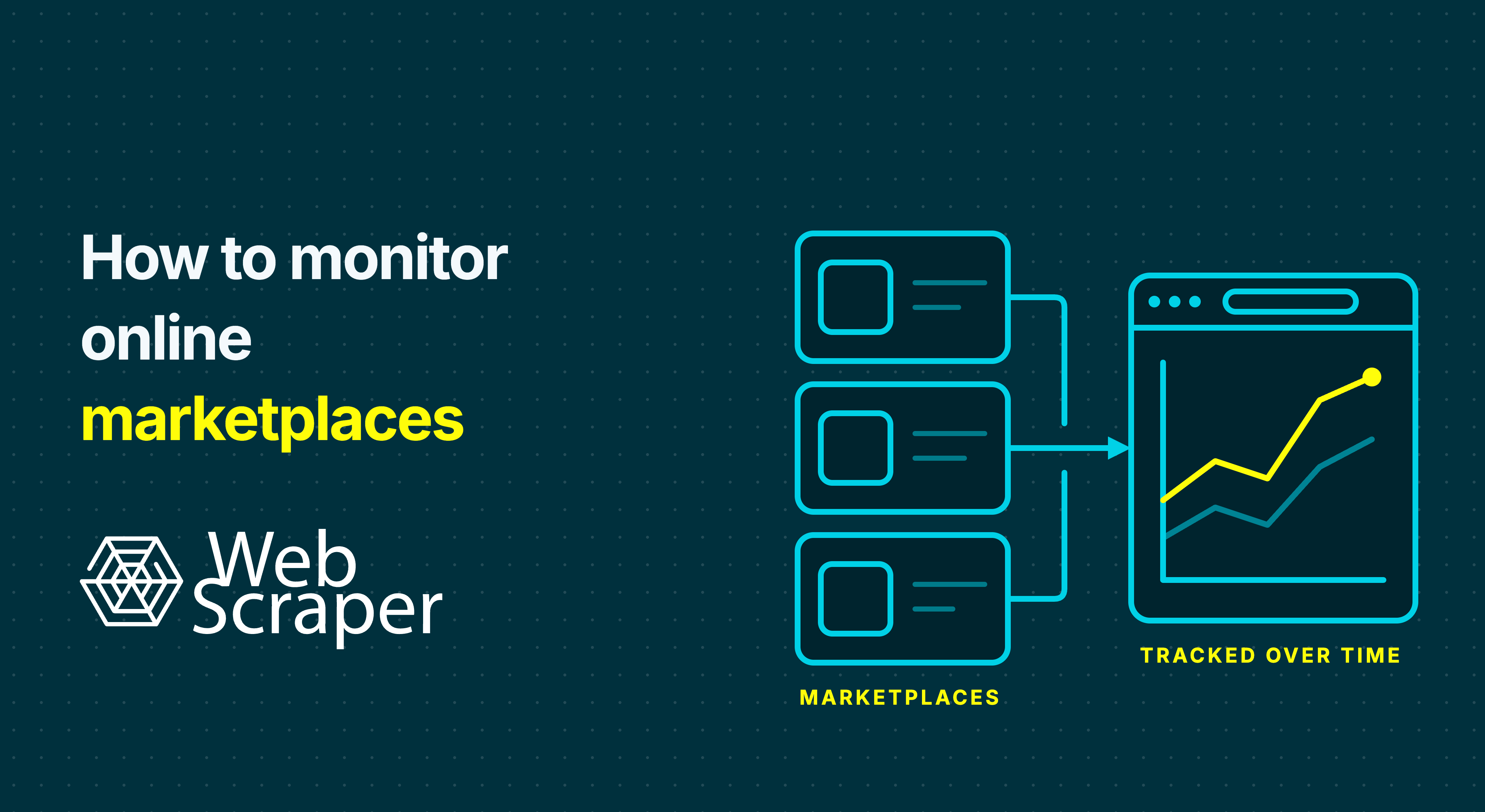
Online marketplace monitoring is not simply checking prices on a schedule. A useful system must repeatedly capture a comparable view of products, variants, offers and sellers, then distinguish genuine market changes from missing pages, extraction failures and normal catalogue movement.

This guide explains how to design that system, from scope and identity rules to collection, validation and business alerts.

A dependable workflow keeps discovery, collection, validation, comparison and action separate. A completed scraping job is not automatically a valid marketplace snapshot, a changed field is not automatically an actionable event, and a missing record is not automatically a removed listing.

Continue Reading

How to track competitor product launches automatically

September 08, 2026

e-commerce data, product launches, web scraping

Tracking competitor product launches reliably requires more than watching pages for visual changes. The practical method is to collect comparable catalogue snapshots, validate every run and compare stable product identities with accepted history.

A newly observed row is only a candidate. It becomes a useful launch signal after you rule out restocks, new variants, relisted products, regional introductions, catalogue backfills and collection errors.

Continue Reading

How to turn a website into data for an AI assistant

September 08, 2026

data pipelines, web scraping, web data, RAG

Turning a website into data for an AI assistant requires more than saving every page as text. You need to define what the assistant should answer, extract one clean and attributable record per page, validate the resulting dataset, and only then pass accepted content to chunking and indexing.

This guide applies that workflow to a public documentation website used by a support assistant. The goal is a current, traceable source dataset, not an end-to-end RAG platform.

Continue Reading