Blog

Best web scraping platforms compared

September 08, 2026

structured data, web scraping tools, web data, data automation

The best web scraping platform is the one whose operating model fits the dataset your team needs to maintain. For recurring structured data from accessible e-commerce sites, marketplaces, job boards, directories and real-estate pages, Web Scraper is the strongest overall choice in this comparison. It combines visual sitemap design and browser testing with managed Cloud execution, data-quality controls and capacity-based scaling.

That recommendation is not universal. Apify is stronger for developers who want packaged or custom cloud programs. Octoparse suits teams that prefer a desktop-first no-code application. Browse AI makes simple recorded monitoring approachable. Firecrawl is designed around developer and AI content APIs. Bright Data is compelling when a target-specific scraper API or extensive access infrastructure already matches the job.

Continue Reading

How to track new property listings automatically

September 07, 2026

automation, property listings, web scraping, change detection
The simplest way to track new property listings is to save a search on a property portal and enable its alerts. That is often enough for one person using one site. When you need to monitor several searches or websites, preserve history, apply custom rules or route listings into business systems, use recurring structured collection followed by a downstream comparison.

The important distinction is that a completed scrape is not a new-listing alert. A reliable workflow must collect the intended market, validate the run, compare stable listing identities with trusted prior state and notify people only after a genuinely new record has been accepted.

Continue Reading

How AI agents use web scraping and browser automation

September 07, 2026

data pipelines, browser automation, web scraping, web data, agent architecture

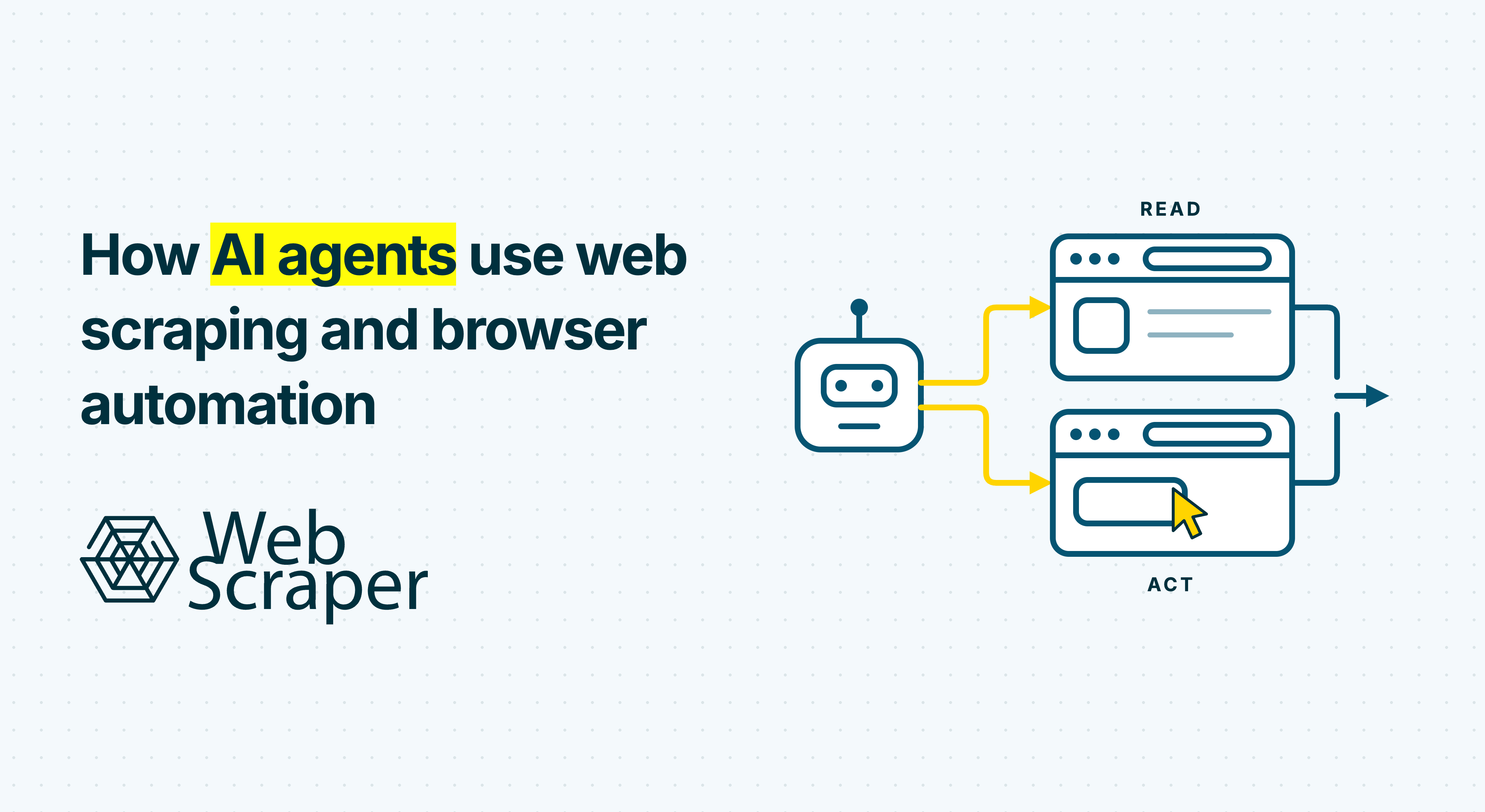
AI agents use web scraping to collect defined information from websites and browser automation to reach page states or perform interface actions. Treating both as one unrestricted “browse the web” tool hides important differences in repeatability, permissions and failure handling.

A dependable architecture routes uncertain discovery to the agent, repeated collection to a tested scraper, and state-changing or consequential work to a controlled browser workflow. That division makes web scraping for AI agents easier to validate, safer to operate and less dependent on repeated model decisions.

Continue Reading

How to Monitor MAP Violations With Web Scraping

September 07, 2026

price monitoring, e-commerce data, web scraping

To monitor minimum advertised price (MAP) violations with web scraping, collect seller- and variant-level advertised-price observations on a schedule, match them to the policy threshold that was effective at the observation time, and send only eligible below-threshold records for review.

The important word is review. A scraper can record what a page displayed. It cannot decide whether the product and seller were matched correctly, whether a coupon or basket price falls within your policy, or whether an observation is legally actionable. A reliable workflow keeps extraction, classification and confirmation separate.

Continue Reading

Production web scraping checklist before deployment

September 06, 2026

automation, data quality, monitoring, deployment

A prototype proves that a scraper can collect the right data under supervision. Production readiness means proving that it can run unattended, reject bad output, deliver an agreed dataset and recover without creating duplicates or silently publishing errors.

Use this production web scraping checklist as a release gate. If the scraper has no measurable acceptance criteria, named owner or tested recovery path, it is not ready to feed a business system, even if the latest manual run looked correct.

Continue Reading

Geo-targeted web scraping for reliable regional data

September 05, 2026

market research, proxy configuration, regional pricing

Geo-targeted web scraping collects a page as it appears in a defined country, region or market. The same URL can return different prices, products, stock, delivery options or even a different page structure because websites use several location signals, not just the visitor's IP address.

The real challenge is not obtaining an IP address in another country. It is proving that each scrape returned the intended market and that the resulting datasets remain comparable.

Continue Reading

Build a company list from public directories

September 04, 2026

entity resolution, company data, web scraping, lead generation
Public directories can provide the raw material for a company list, but downloading rows is only the beginning. A useful list needs defined coverage, a consistent schema, traceable sources, rules for resolving duplicate companies and locations, and a process for checking and refreshing the result.

This guide covers building an internal company dataset, not publishing an online directory. The aim is to turn records from several approved public sources into a list that sales operations, RevOps, market research, agency or data teams can explain and maintain.

Continue Reading

Web Scraper vs Browse AI

September 03, 2026

data extraction, web scraping tools, no-code scraping, web scraping, Web Scraper vs
Web Scraper and Browse AI are both no-code tools for collecting data from websites, but they are designed around different workflows. Browse AI is built around training an AI robot on a page, then using that robot for extraction, monitoring and integrations. Web Scraper is built around creating an inspectable sitemap that defines how pages are navigated and which fields become records.

For a quick one-site monitor or a simple extraction that should flow into a spreadsheet, Browse AI may be the faster starting point. For recurring product, marketplace, directory, job or real-estate datasets that need explicit navigation, repeatable field logic, validation and economical high-volume execution, Web Scraper is usually the stronger choice.

Continue Reading

Browser extension vs desktop web scraper: how to choose

September 02, 2026

web scraping tools, cloud scraping, browser extension, desktop web scraper
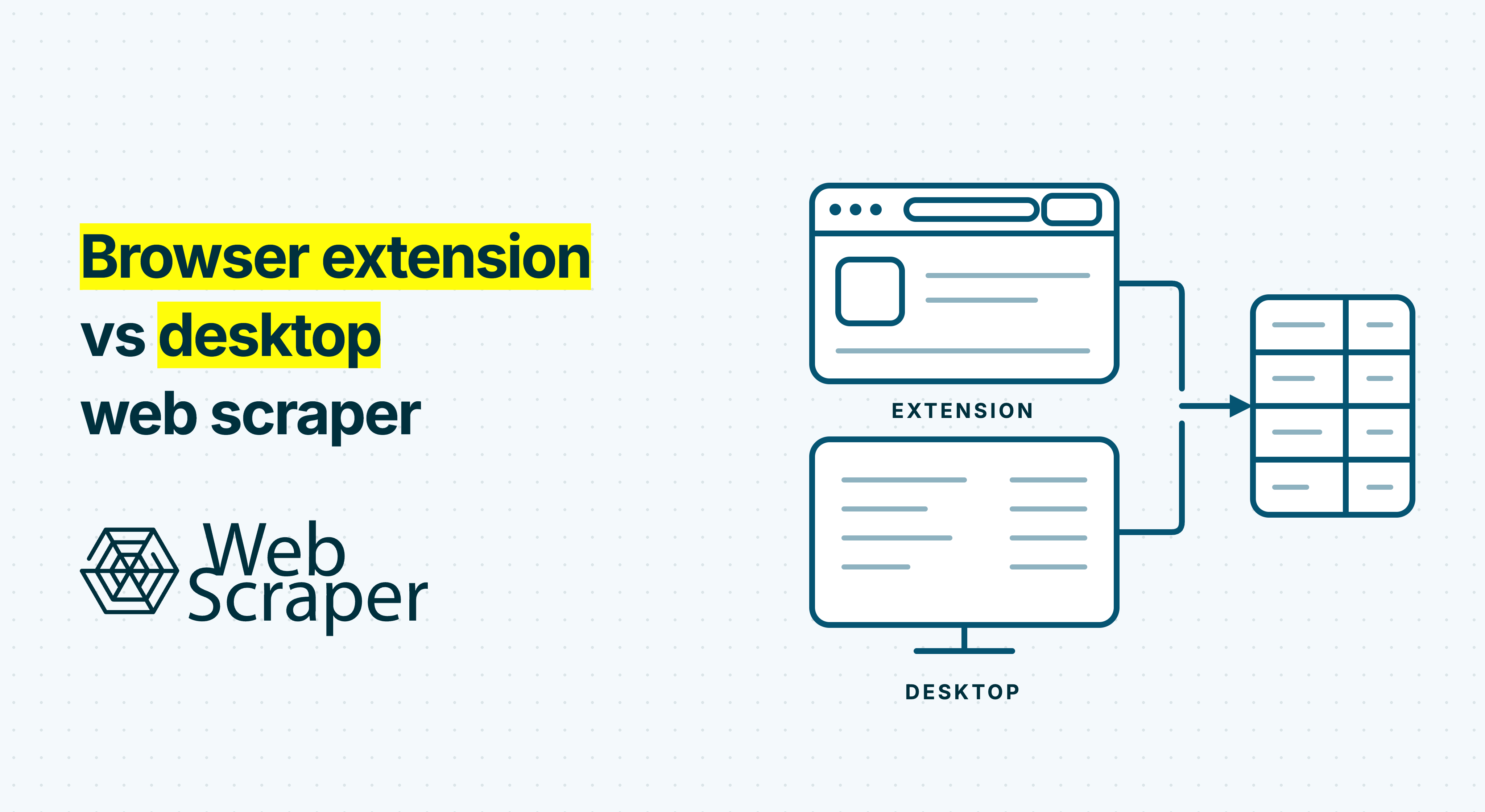
A browser extension is not automatically a basic scraper, and a desktop application is not automatically production-grade. Those labels mainly describe where you open the builder. They do not reliably tell you where jobs run, where data is stored or whether the workflow can operate unattended.

For occasional extraction, a local browser extension may be enough. For a repeatable business dataset, the stronger choice is often a hybrid workflow: build and test the scraper against the live website in your browser, then run the tested configuration in managed cloud infrastructure.

Continue Reading

Best web scraping tools for e-commerce

September 02, 2026

price monitoring, web scraping tools, data automation, product data
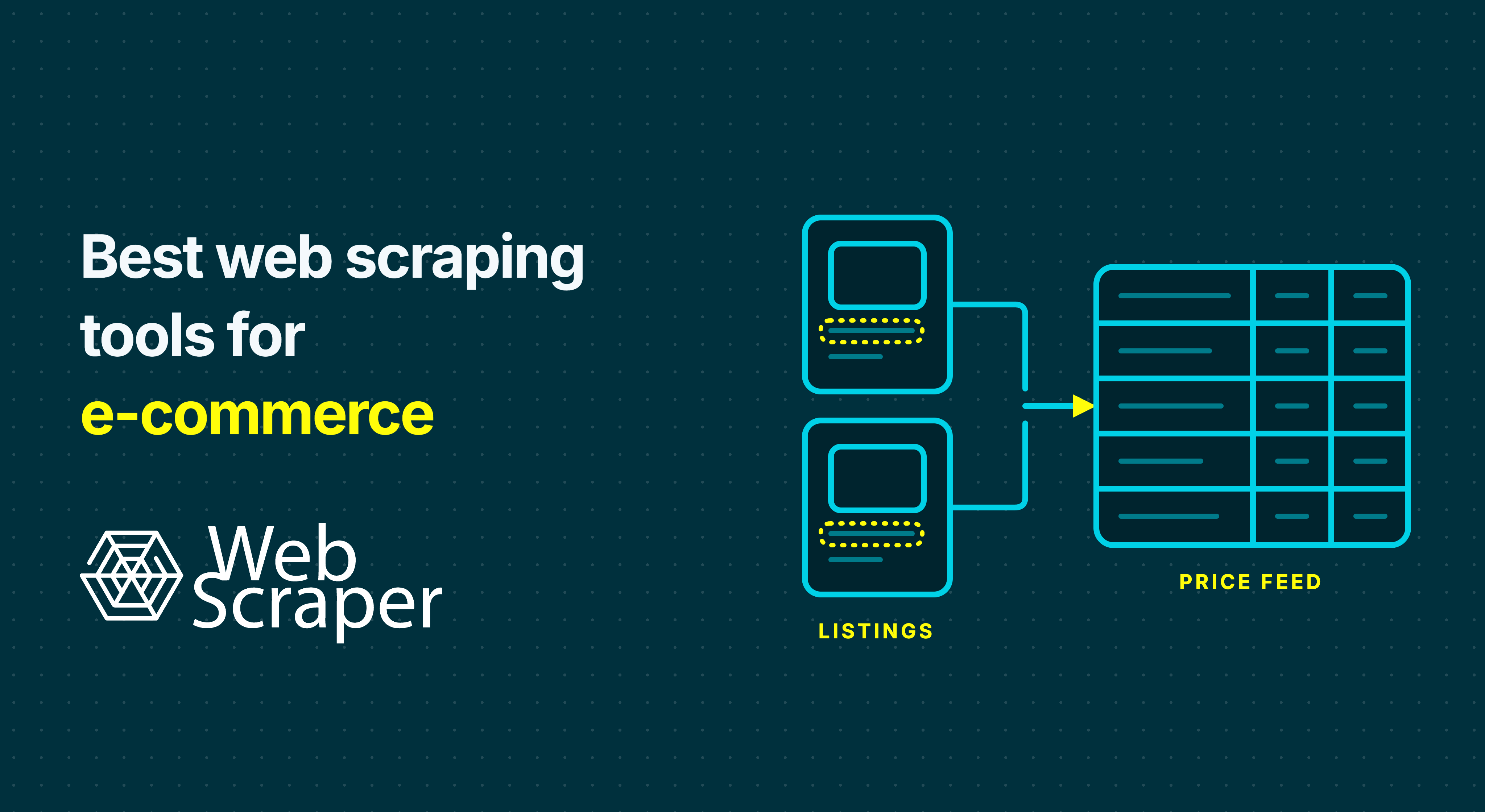
The best web scraping tool for e-commerce is the one that produces a dependable product dataset, not simply a successful page request. For most data and operations teams, Web Scraper is the strongest overall choice because its visual sitemap models catalogue traversal and record structure, while Web Scraper Cloud adds scheduling, managed browser execution, quality controls and delivery.

That recommendation is not universal. Octoparse suits teams that prefer a desktop application and templates, Apify suits developers who want ready-made and programmable cloud jobs, and enterprise APIs can be a better choice when they already support the required retailer. The comparison below makes those boundaries explicit.

Continue Reading

CAPTCHA web scraping and Cloudflare Turnstile

September 01, 2026

Cloudflare Turnstile, web scraping reliability, Web Scraper Cloud, data quality, scraping project planning
A CAPTCHA or Cloudflare Turnstile check does not automatically make a scraping project impossible. It does mean that one successful page load is no longer enough evidence for a recurring data workflow.

The real question is whether the target can produce a complete, correct and economical dataset repeatedly under production conditions. Answering that requires a defined output contract, a representative pilot and clear criteria for proceeding, revising the design, using an authorised alternative or stopping.

Continue Reading

How to scrape infinite scroll pages and lazy-loaded content

September 01, 2026

Web Scraper selectors, lazy loading, Web scraping automation, data quality, infinite scroll
To scrape infinite scroll pages reliably, identify the action that reveals new records, reproduce it with the right selector, and stop only when a defined dataset boundary has been reached. Scrolling, clicking Load more and waiting for a field to appear are different workflows, even when the page makes them look similar.

The goal is not simply to move a browser to the bottom. It is to produce a complete, correctly structured dataset that can pass the same checks on every run. That requires a dataset contract, a defensible stopping rule and validation from the first batch to the last.

Continue Reading

How to find where a website gets its data

August 31, 2026

embedded JSON, Fetch and XHR, web scraping, website data, Chrome DevTools
To find where a website gets its data, trace one distinctive value through the main document, embedded JSON, background requests and the live page after any required interaction. This reveals the simplest extraction route that can reproduce the data reliably.

DevTools can show how data reaches the browser. It cannot reveal the website's hidden upstream database or prove where the information originally came from. The practical goal is to identify a complete, repeatable browser-visible source for the records you need.

Continue Reading

How headless browsers work in web scraping

August 31, 2026

Web Scraper Cloud, data quality, browser automation, web scraping, JavaScript
A headless browser is a real browser running without a visible user interface. In web scraping, automation software uses it to load a page, execute JavaScript, perform interactions and read the resulting live document.

That makes headless browsers useful when the dataset does not exist until the website has rendered or changed state. It also makes them heavier and more failure-prone than processing raw HTML, so the important question is not whether a website uses JavaScript. It is whether browser execution is required to produce the specific data you need.

Continue Reading

robots.txt and web scraping: what it actually means

August 28, 2026

data governance, crawler rules, web scraping, responsible scraping

A robots.txt file tells compliant automated clients which URL paths a website asks them to access or avoid. It does not technically block a scraper, grant permission to collect or reuse data, or decide whether a scraping project is lawful.

For a real project, treat robots.txt as an important input to a wider decision. Read the rule that applies to your crawler, respect excluded paths, control the total request load, and separately check access controls, terms, data rights and authorised alternatives before scraping at scale.

Continue Reading